


Indians Without Drinking Water Amid Catastrophic Drought

India's killer heatwave is leaving the country reeling from the worst drought in decades and a rural population struggling to survive.
Relief is due with the arrival of the monsoon in mid-June, and because of the impending La Nina weather pattern, the forecast is for above-average rainfall.

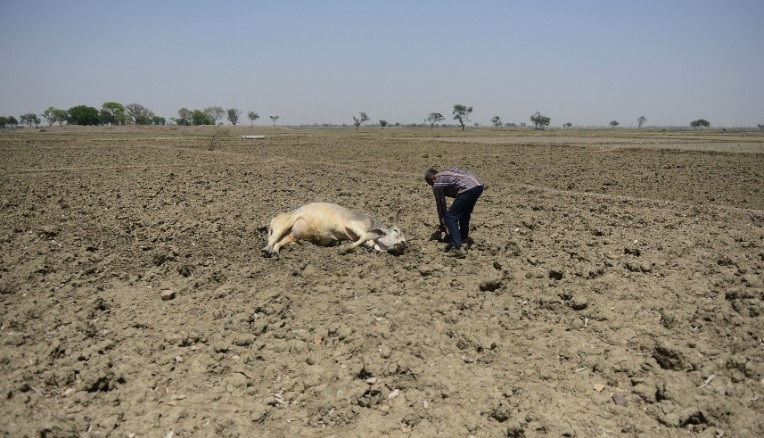

However WaterAid India's Head of Policy, Nitya Jacob, says groundwater levels are so depleted that even if a good monsoon comes in June -- and meteorologists predict there will be one that ends the drought -- it won't be enough.
Central Water Commission data shows that India's major reservoirs are 79% empty, and 75% of India's basins are holding less water than the 10-year average.
"India is currently in their summer or pre-monsoon season, which lasts from April to late May, or early June," says Guy.
"This year we've seen temperatures range from the lower 40s to as high as 47˚C or 116˚Fahrenheit. For some, this is three to five degrees (Celsius) above normal." And critically, the past two monsoon seasons have seen below average rainfall.
The government estimates up to 330 million people could currently be affected by the dry climate conditions.
In an open letter to India's Prime Minister Narendra Modi in April, more than 150 of India's activists and academics expressed their concern about the drought's impact on the rural population.
"In areas where rains have failed, farmers who depend mainly on rainwater to irrigate their crops have no, or very low, crop yields," they wrote.
"Those who rely on irrigation are also affected, with groundwater sinking and streams and reservoirs drying up."
The combination of heat with humidity makes India a global hot spot for heat-related illnesses and fatalities -- so far the government estimates more than 370 people have died.
2015's heatwave led to around 2,500 deaths in India, making it among the top five deadliest years in recorded history.
"It was a wake-up call for us," said K. Dhananjaya Reddy, the director of disaster management in Andhra Pradesh, a state that saw more than 1,300 deaths in 2015.
In 2016, as part of a prevention strategy, 10 cities across the hottest parts of India have teamed up with different organizations to create plans to combat the heat.
"All of the plans are focused on the most vulnerable population who don't have access to air conditioning, or have to work outdoors," says Anjali Jaiswal, Natural Resources Defense Council's India Initiative director.
The low-tech solutions range from warning systems, to medical training, to enforcing cuts to power and water supplies during cooler times. In Bihar, according to The Hindu, the increased threat of wildfires has even resulted in a cooking ban between 6 p.m. and 9 p.m.
Comments